 EN
EN

222nm UVC Downlights vs Ceiling UV Germicidal Luminaires
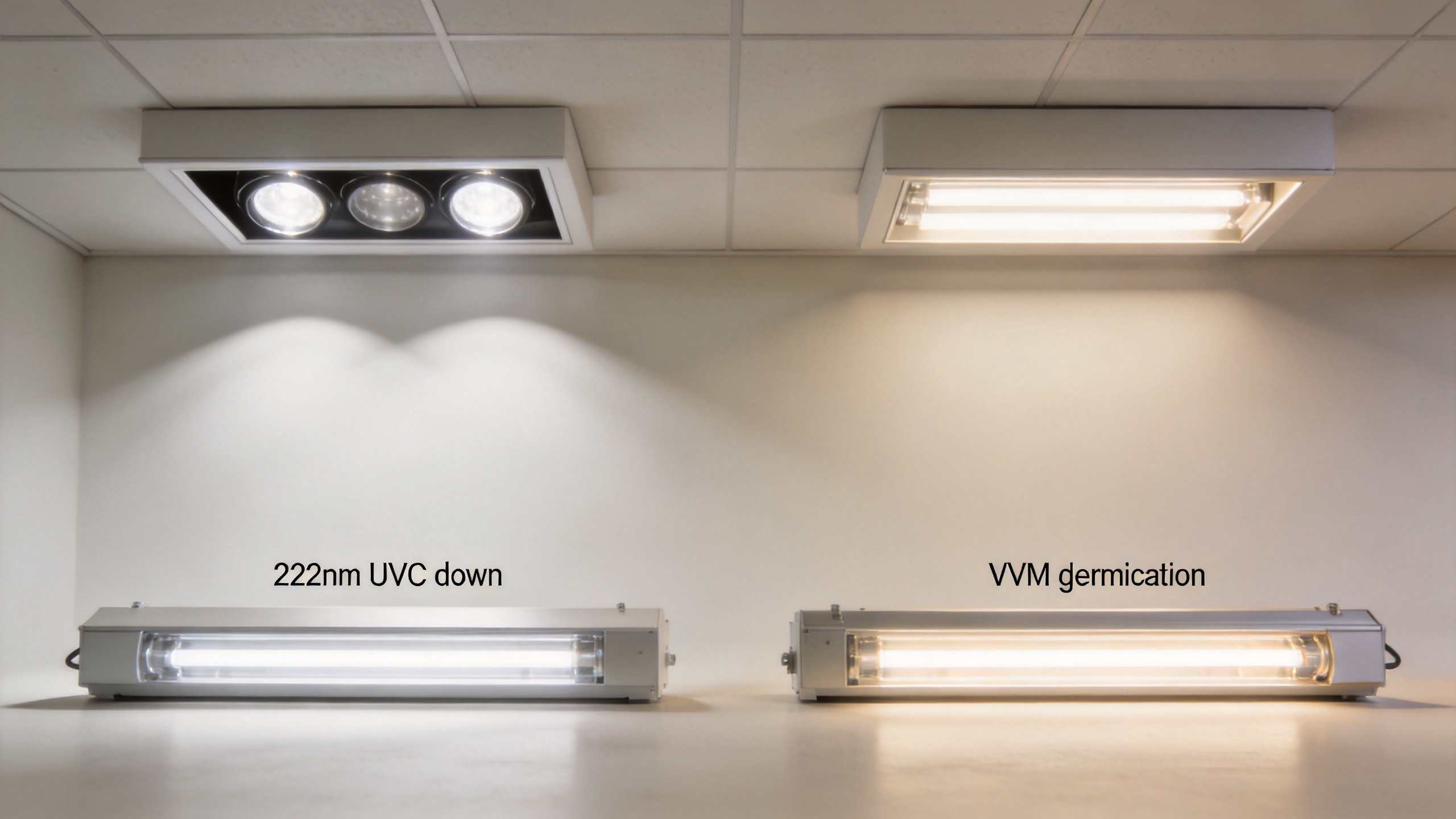
For an indoor 222nm UVC project, the first decision is often not simply which lamp has the higher headline output. It is whether the fixture geometry fits the room, the way people use it, and the exposure-control plan. Recessed 222nm UVC downlights and ceiling-mounted UV germicidal luminaires can both support a Far UVC concept, but they distribute light, occupy space, and affect installation work in very different ways.
From a B2B procurement viewpoint, the useful comparison is like-for-like: filtered source design, intended mounting height, beam distribution, electrical and mechanical interfaces, maintenance access, and the evidence needed for commissioning. Research and product materials around filtered Far UVC 222 nm sources make an important point: source-level evidence is not the same as a completed, safe installation. The final design still needs a site-specific review against applicable exposure limits and local requirements.
What the two fixture formats are designed to solve
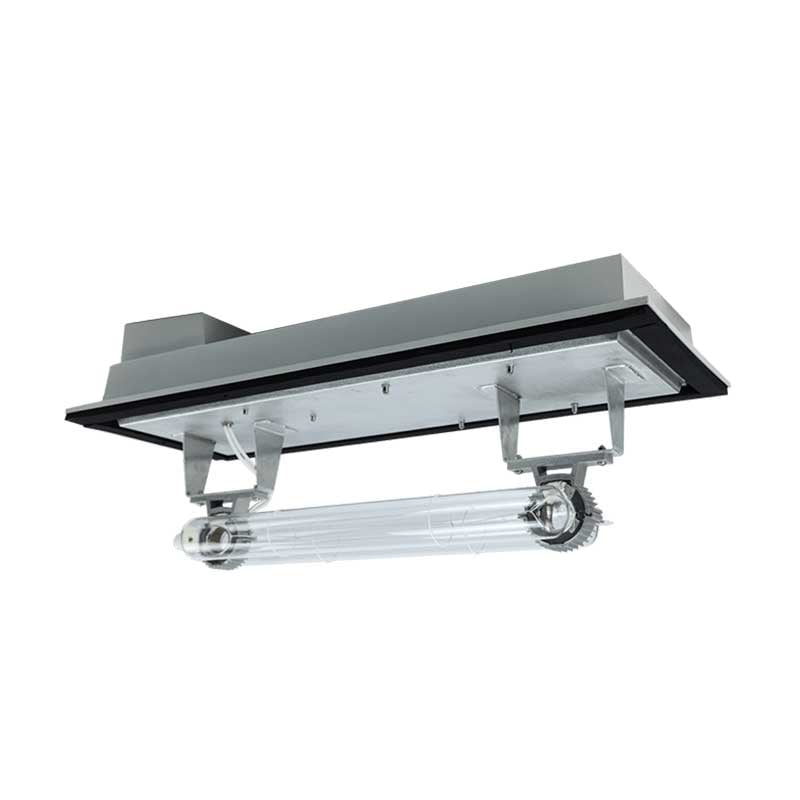
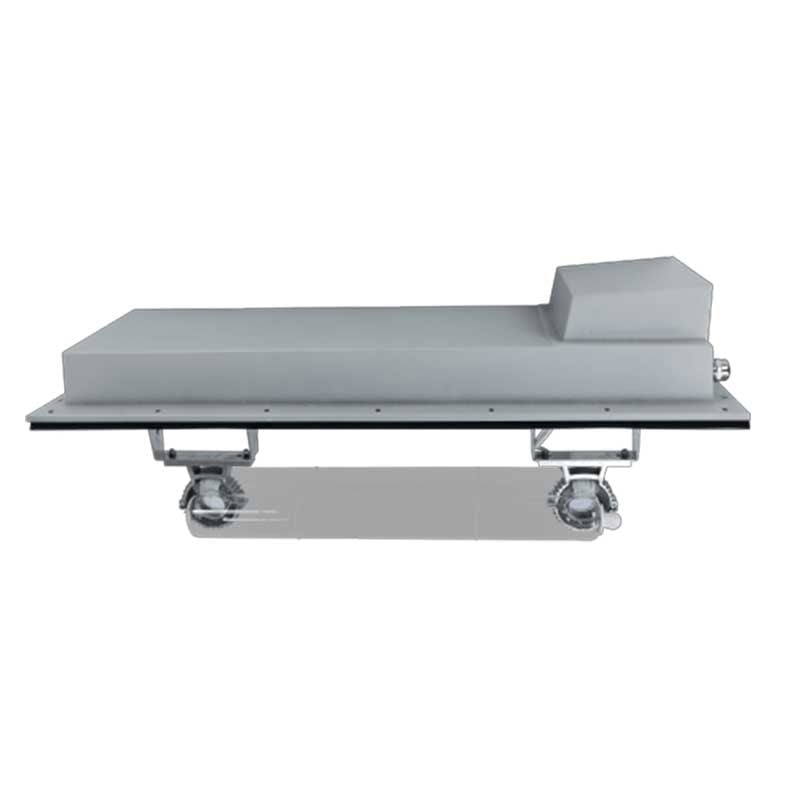
A 222nm UVC downlight is recessed into a ceiling plane. Its visual advantage is clear: it can preserve a clean ceiling layout and avoid a suspended fixture body. This format is often worth evaluating where ceiling appearance, tamper resistance, or coordination with other recessed luminaires matters. In a room with fixed circulation zones, a downlight layout can also help planners map treatment coverage to a regular ceiling grid.
A ceiling UV germicidal luminaire is mounted on, or below, the ceiling. The housing is more visible, yet that visibility can be practical. Installers may have easier access to the fixture for inspection, replacement, cleaning, or aiming where the design permits it. Surface-mounted and pendant-style options can be particularly relevant in retrofit spaces where cutting ceiling openings is undesirable or where plenum conditions limit recessed installation.
Neither form factor is automatically the better 222nm UVC choice. A compact recessed layout may suit a finished interior, while an exposed ceiling luminaire may simplify service planning. The decision depends on the room geometry and the documentation the supplier can provide.
Compare light distribution before comparing fixture count
Downlights normally direct their output downward from discrete ceiling points. That can be useful when a designer wants a predictable grid, but it also means spacing, ceiling height, obstructions, and beam behavior need to be reviewed together. Furniture, partitions, shelves, and decorative elements can change the effective paths of light within an occupied space.
Ceiling UV germicidal luminaires can use a broader or differently shaped distribution depending on their optical design and mounting arrangement. This may offer more flexibility for open rooms, large circulation areas, or retrofit layouts, but it does not remove the need for a lighting plan. Fixture count alone does not confirm coverage, dose, or compliance.
| Selection point | 222nm UVC downlight | Ceiling UV germicidal luminaire |
|---|---|---|
| Ceiling integration | Flush, recessed appearance | Visible housing; often simpler retrofit coordination |
| Installation work | Requires ceiling cut-out and void review | Requires mounting surface and support review |
| Service access | May depend on ceiling access conditions | Usually accessible from the room side |
| Layout approach | Regular point-by-point ceiling grid | Can suit open-area or retrofit layouts |
| Validation focus | Spacing, beam overlap, obstructions, exposure assessment | Mounting position, distribution, exposure assessment, access |
Installation and facility coordination questions
For recessed fixtures, ask early whether the ceiling construction permits the required opening, depth, heat management, wiring route, and future access. A visually elegant 222nm UVC downlight can create avoidable service work if the fixture is inaccessible after ceiling finishing. Coordination with fire systems, HVAC diffusers, sensors, and other luminaires is also part of the layout review.
For top-mounted luminaires, confirm the mounting substrate, mechanical support, cable routing, cleaning access, and potential glare or line-of-sight concerns. In both cases, document occupancy patterns. A room that is intermittently occupied, continuously staffed, or used by the public can require different control and validation considerations.
The supplied 222nm Far UVC downlight product can be a starting point for a recessed-format discussion. Its listed title confirms the product category, but project teams should request the fixture-specific technical documentation rather than infer irradiance, coverage, or compliance performance from the title alone.
Why filtering and verification belong in the comparison
Far UVC 222 nm LED and excimer-source discussions commonly emphasize wavelength and filtering. In practice, procurement teams should ask what the fixture emits across its relevant spectral range, what optical and filtering elements are used where applicable, and what test documentation supports the claims. Do not treat the words “222 nm” as a complete safety case.
A practical way to start is to separate what is known from what still needs verification. Known inputs may include the fixture form, intended room type, mounting concept, and supplier documentation. Site-specific inputs include mounting height, room reflectance, occupied positions, control logic, cleaning procedures, and applicable exposure requirements. The conclusion applies to the evaluated room and configuration, not automatically to every indoor space.
Which option fits common indoor project conditions?
Choose a downlight-oriented approach when a flush ceiling appearance, a planned new-build grid, and protected fixture placement are priorities. It can be a sensible route for reception zones, corridors, meeting rooms, or other interiors where ceiling design is already being coordinated. This may be a suitable direction, although the final spacing and validation scope should be confirmed.
Choose a ceiling-luminaire approach when retrofit simplicity, visible service access, or adaptation to an existing open ceiling matters more than a flush appearance. It can also help when the project needs to revise fixture positions after a site survey. That said, the next question is whether the operating data and exposure assessment support the proposed mounting arrangement.
How to brief a supplier on a 222nm UVC lighting comparison
When requesting a 222nm UVC proposal, provide a room drawing, ceiling height, occupancy schedule, surface finishes, obstructions, and the intended maintenance window. This allows suppliers to respond to the actual 222nm UVC installation question rather than offer a generic lamp count. For a Far UVC 222 nm LED or excimer-based solution, ask for the relevant spectral documentation, fixture photometry where available, mounting assumptions, and the limits of any application statement.
A downlight proposal for 222nm UVC should identify cut-out requirements, ceiling-void conditions, accessible service routes, and the proposed fixture grid. A ceiling-luminaire proposal for 222nm UVC should identify bracket or suspension details, cable routing, room-side access, and the expected distribution pattern. In either proposal, the phrase Far UVC 222 nm LED should not be treated as a substitute for model-specific evidence.
It also helps to define acceptance criteria before purchase. For a 222nm UVC project, these can include approved drawings, fixture identification, mounting-height verification, controls testing, labeling, maintenance instructions, and a documented approach to exposure assessment. This turns the comparison into a controllable procurement process rather than a visual preference exercise.
Finally, distinguish a source discussion from a system decision. A 222nm UVC fixture may be appropriate for an indoor concept only after the installed arrangement is evaluated. A Far UVC 222 nm LED claim, filtered-source statement, or laboratory study can inform the review, but it does not confirm every room layout. Keeping that boundary clear supports safer communication among facility teams, installers, and suppliers.
A procurement checklist for 222nm UVC fixtures
- Confirm the intended application, occupancy pattern, and room dimensions.
- Request spectral, optical, electrical, mechanical, and maintenance documentation for the actual fixture model.
- Ask suppliers to define the validation scope, including mounting assumptions and measurement approach.
- Review local requirements and applicable exposure limits with qualified project stakeholders.
- Check ceiling coordination, controls, labeling, service access, and commissioning responsibilities before purchase.
The practical starting point is not “downlight versus ceiling luminaire” in isolation. It is a documented comparison of two installation concepts against the same room, operating conditions, and validation criteria. Before issuing an RFQ, list the room inputs and verification questions every supplier must address so proposals remain comparable.