 EN
EN

Choosing UV Water Sterilizer Solutions for Commercial Water Systems
For a facility manager or procurement team, a uv light water filter is not a plug-and-play substitute for a complete treatment train. It is a disinfection barrier that must be matched to actual flow, water quality, operating hours, and the level of microbiological control the project requires. The right UV water sterilizer solution starts with a clear design basis rather than a lamp-wattage comparison.
Commercial applications—food processing, hospitality, laboratories, hospitals, schools, and water reuse systems—often have variable demand and stricter documentation needs than small point-of-use installations. This guide explains how to compare a UV light water filter for those conditions, what a supplier should be able to document, and where upstream treatment still matters.
Start with the treatment objective, not the equipment label
First define what the UV reactor is expected to do. Is it a final barrier for treated process water, a microbial-control step before storage, or a component in a potable-water system? The answer affects the required validation evidence, monitoring, redundancy, and commissioning plan.
UV technology works by exposing microorganisms to germicidal ultraviolet energy as water passes through a chamber. It does not remove sediment, dissolved salts, hardness, or many chemical contaminants. For that reason, procurement specifications should describe the broader treatment train: source water, prefiltration, pressure range, maximum and normal flow, temperature range, and downstream storage or distribution conditions.
For regulated public-water applications, EPA guidance emphasizes operation of validated UV reactors within the validated conditions for the required UV dose. Even when a commercial project is outside that regulatory path, the principle is useful: a claimed performance level only applies within the hydraulic and water-quality conditions used to support it.
Size the UV light water filter around real flow and water quality
Nominal flow rate alone can be misleading. Ask for the maximum design flow, the expected continuous flow, and any short-duration peak flow. Then confirm how the supplier relates those flows to the target UV dose, UV transmittance (UVT), lamp aging, sleeve fouling, and the reactor configuration. A unit that is acceptable at a favorable UVT value may need a different operating limit when the incoming water is more absorbent.
- Flow profile: Include peaks, recirculation loops, and low-flow periods rather than only a daily total.
- UVT and turbidity: Request the assumed water-quality envelope and determine whether pretreatment is required to stay inside it.
- Hydraulics: Confirm pressure loss, connection size, installation orientation, and whether bypass conditions are permitted.
- Safety margin: Check how lamp output decline and quartz-sleeve fouling are included in the sizing basis.
This is where uv light for purifying water should be treated as an engineered process, not a generic product feature. A supplier should be able to state the assumptions behind its flow rating and identify which site conditions would require recalculation.

Compare reactor design, lamps, controls, and maintainability
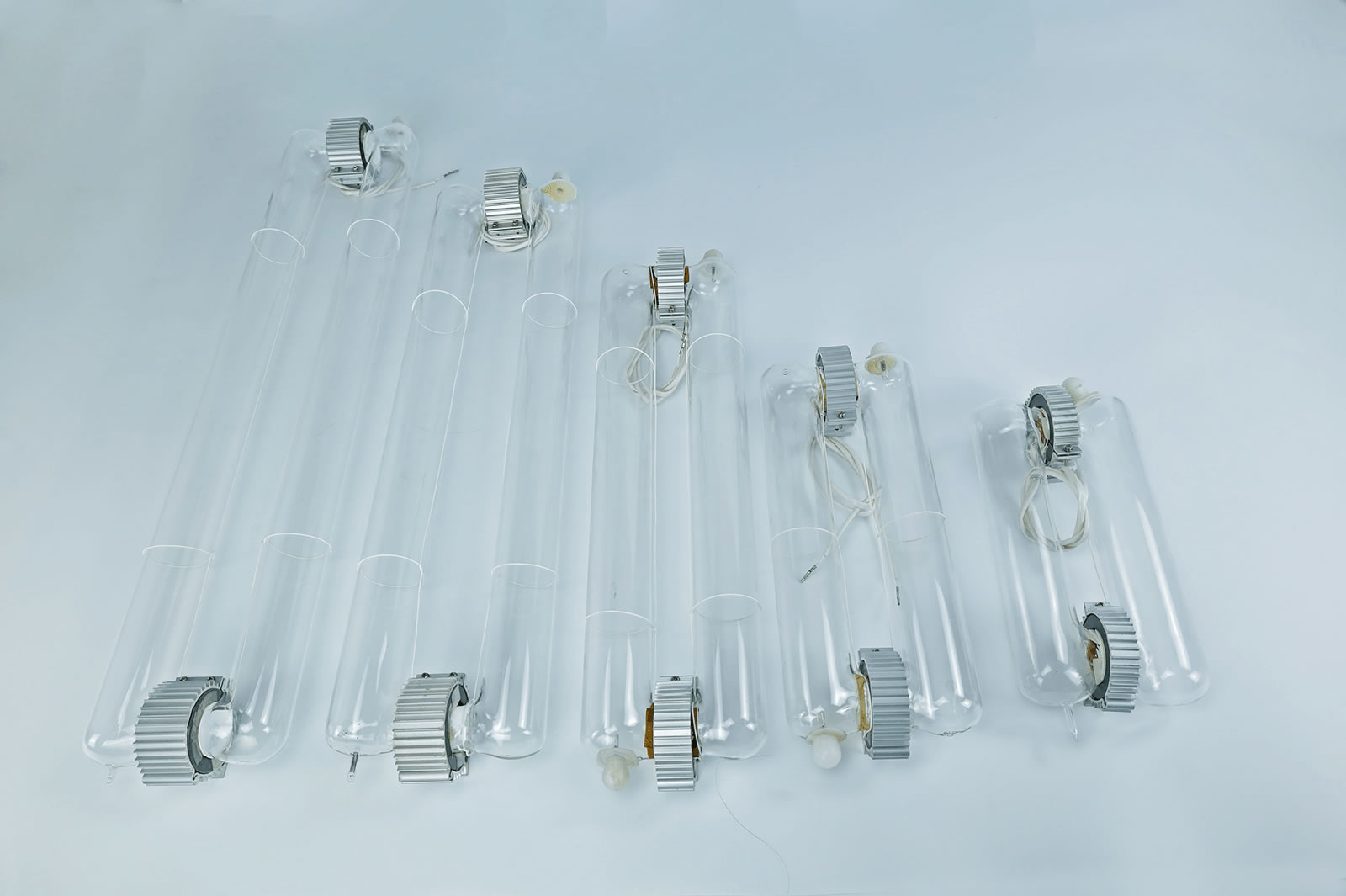
Commercial buyers should compare the entire system package. Stainless-steel chamber construction, electrical enclosure protection, lamp access, sleeve-cleaning options, sensor placement, alarms, and control logic all affect lifecycle performance. A well-specified UV light water filter should be serviceable without creating unnecessary downtime or exposing technicians to avoidable handling risks.
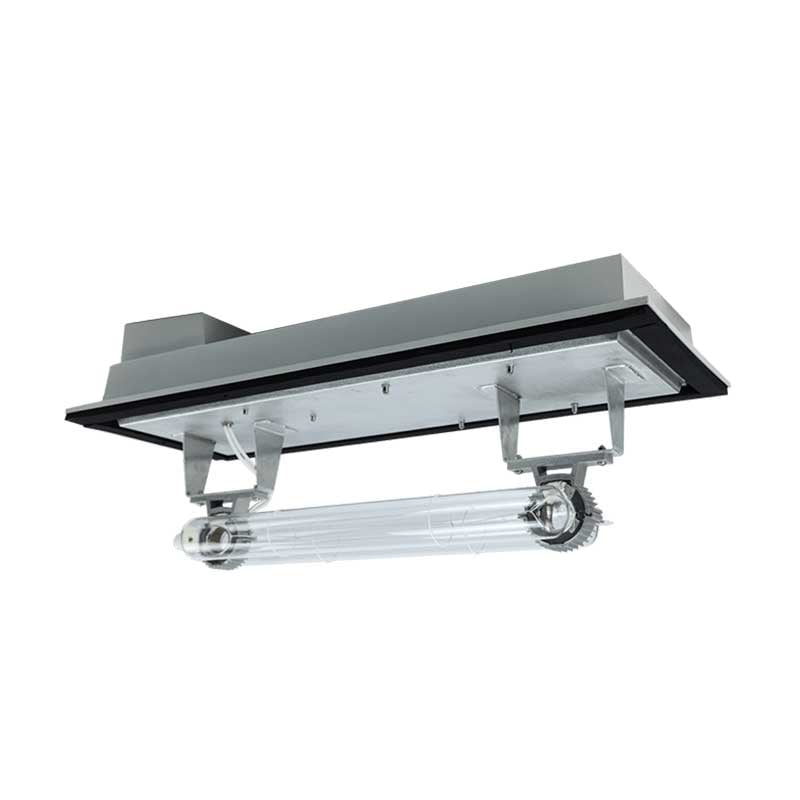
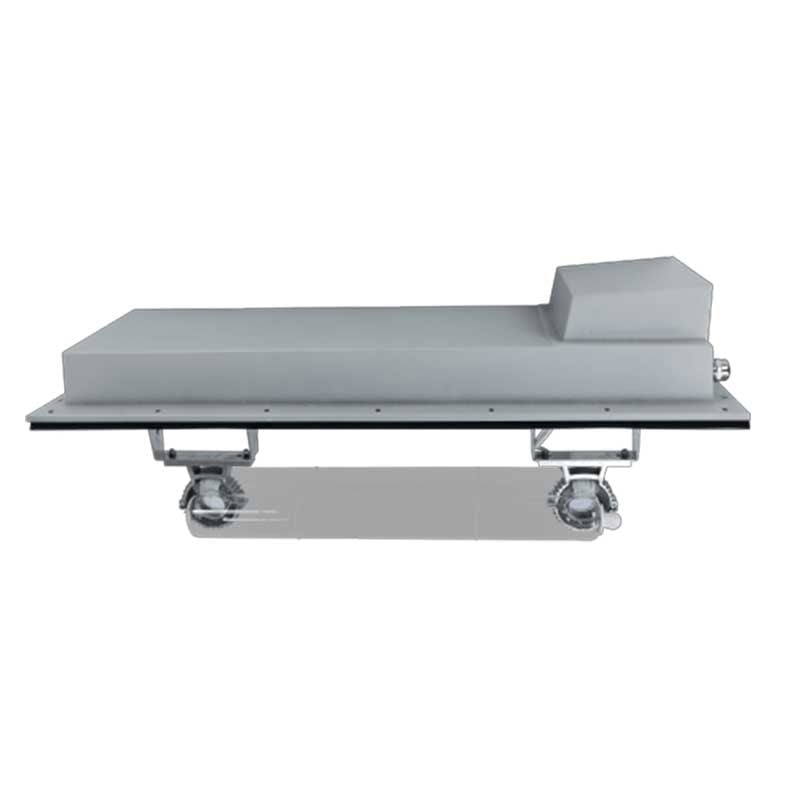
For example, the available product record for the UV water sterilizer cabinet with induction lamp (300W) can be reviewed as part of a supplier comparison. Use the confirmed product page to request project-specific information such as compatible flow conditions, electrical requirements, maintenance access, and documentation; do not assume performance details that are not stated in the approved submittal.
Monitoring deserves special attention. A lamp-status indicator confirms that a lamp is powered, but it is not the same as validated delivered-dose assurance. Depending on the application, teams may need UV intensity monitoring, flow interlocks, audible or remote alarms, automatic shutdown or diversion logic, and records that support maintenance and audit procedures.
Verify standards, evidence, and supplier scope before placing an order
A certification label should be assessed in context. NSF/ANSI 55 addresses ultraviolet microbiological water treatment systems, but the relevant class, claimed conditions, and project jurisdiction all need review. Ask whether the proposed configuration—not simply a related product family—has evidence that matches the intended application.
| Procurement question | Why it matters | Evidence to request |
|---|---|---|
| What dose and flow conditions are claimed? | Prevents comparison by lamp power alone. | Validation summary, performance curve, and design UVT assumptions. |
| How is performance monitored? | Supports response when water quality or lamp output changes. | Sensor specifications, alarm setpoints, and interlock logic. |
| What upstream water quality is required? | Protects reactor performance and maintenance intervals. | Pretreatment recommendations and allowable turbidity/UVT range. |
| What service parts and procedures are supplied? | Reduces operational uncertainty after commissioning. | Lamp and sleeve schedule, manuals, spare-part list, and warranty terms. |
Plan pre-treatment and installation as part of the solution
Because UV does not filter particles, upstream filtration is often essential. Suspended solids can shield microorganisms, while mineral scale or organics can reduce UV transmission through the water or build up on a quartz sleeve. The pre-treatment design may include sediment removal, softening, carbon treatment, or other steps selected from a measured water analysis.
Installation details also affect results. Provide adequate straight-run and isolation space where required by the design, allow safe access for lamp and sleeve service, verify electrical protection and grounding, and define a commissioning sequence. If treated water can be stored or distributed through long pipe runs, include a plan to manage downstream recontamination; a UV reactor only treats water that passes through it under the intended conditions.
Build a commercial acceptance checklist
Before approval, align engineering, purchasing, operations, and the supplier on a short acceptance checklist:
- Confirmed source-water analysis and maximum/normal flow data.
- Documented dose basis, UVT range, and lamp-aging/fouling assumptions.
- Required standards, validation documents, and project submittals reviewed.
- Control, alarm, sensor, and fail-safe behavior agreed for the site.
- Pre-treatment, installation, commissioning, and maintenance responsibilities assigned.
- Critical spares, response times, and training requirements included in the supply scope.
Using this checklist turns the decision from “which UV unit looks largest?” into a defensible system selection. The most suitable uv light water filter for a commercial project is the one whose verified operating envelope, controls, service plan, and documentation match the facility’s water and risk profile.
Document the UV light water filter selection basis
For commercial buying teams, each uv light water filter quotation should carry the same data sheet. Record the uv light water filter model, design flow, normal flow, water temperature, inlet UVT, pressure limit, electrical supply, and expected operating hours. This makes one uv light water filter proposal comparable with another without relying on a headline lamp rating.
Use the following review prompts during supplier discussions:
- Is the uv light water filter rating tied to stated UVT and flow conditions?
- Does the uv light water filter include an intensity sensor, lamp alarm, or flow interlock where the project needs one?
- Can the uv light water filter be isolated and serviced without interrupting the wider process unnecessarily?
- What upstream filter protects the uv light water filter from solids and sleeve fouling?
- What commissioning test confirms that the uv light water filter operates within its specified envelope?
These questions also clarify the role of uv light for purifying water. In a commercial design, uv light for purifying water is selected with measured water data, verified operating limits, and an operating response plan. Treating uv light for purifying water as a standalone claim can hide the impact of flow surges, low UVT, or deferred maintenance.
During bid comparison, repeat the same review for every uv light water filter: confirm dose evidence, the stated UVT range, sensor behavior, cleaning requirements, and spare-part availability. A documented uv light water filter package is easier for engineering and operations teams to accept. For sites that rely on uv light for purifying water as a final microbial barrier, retain the supplier’s submittals, commissioning records, and maintenance instructions with the facility water-treatment file.
Conclusion: choose a verified operating envelope
Commercial UV projects succeed when the reactor is selected as one part of a managed water system. Define the microbiological objective, measure the water, size for actual flow and UVT, verify applicable evidence, and plan for monitoring and service. With those inputs in place, procurement teams can compare UV water sterilizer solutions on performance and lifecycle fit rather than on headline lamp ratings alone.