 EN
EN

Commercial UV Water Treatment Systems: Supplier Evaluation Checklist
Choosing uv systems for water treatment is not simply a question of comparing lamp wattage or a catalogue flow rate. For a commercial, industrial, municipal, food-processing, healthcare, or reuse project, the purchasing team needs evidence that a reactor will deliver the required performance under the water conditions and operating range that actually apply on site. This checklist turns that evaluation into a practical supplier conversation.
The starting point is to define the duty clearly: source water, design and peak flow, ultraviolet transmittance (UVT), target organisms or treatment objective, pressure and temperature limits, available footprint, electrical supply, and control-system requirements. With those inputs in hand, uv systems for water treatment can be compared on validated performance rather than headline claims.
1. Ask for a project-specific performance basis
A credible supplier should explain what performance basis is being quoted and how it connects to your application. Ask whether the stated flow rate assumes a particular UVT, lamp output, sleeve condition, and dose target. If any of those assumptions change, the usable capacity can change too.
- What water quality range, including minimum UVT, was used for selection?
- What flow range is covered, including normal, peak, and turndown conditions?
- What dose or treatment objective is being used for the proposal?
- How are lamp aging, quartz-sleeve fouling, sensor uncertainty, and component faults addressed?
- What happens when water conditions fall outside the validated operating envelope?
Guidance from water authorities emphasizes that UV dose is influenced by UV intensity, flow rate, and UVT. It also calls for validation conditions that account for fouling, aging, measurement uncertainty, hydraulics, and critical-component failure. That is why a supplier quote for uv systems for water treatment should include operating assumptions—not just a model number.
2. Check validation, standards, and documentation
Documentation is often the dividing line between a system that is easy to procure and one that is difficult to approve. Ask suppliers to identify the standards, validation protocols, test reports, and regional compliance documents relevant to your project. NSF/ANSI 55 is one recognized framework for UV microbiological water-treatment systems, but it is not a substitute for confirming the exact market, application, and authority requirements.
| Document to request | Why it matters | Supplier question |
|---|---|---|
| Validation report or performance test summary | Connects dose performance to defined operating conditions | Which flow, UVT, lamp-power, and alarm conditions were included? |
| Technical data sheet | Confirms mechanical and electrical fit | Are materials, pressure rating, connections, power, and footprint specified? |
| Control and alarm description | Shows how operations staff will identify out-of-range conditions | Which alarms, interlocks, data points, and remote interfaces are included? |
| Maintenance schedule | Supports operating-cost and downtime planning | What are the lamp, sleeve, sensor, and cleaning intervals? |
| Compliance evidence | Helps the buyer assess market-specific acceptance | Which certificates apply to this exact configuration and destination market? |
3. Evaluate reactor design against the installation
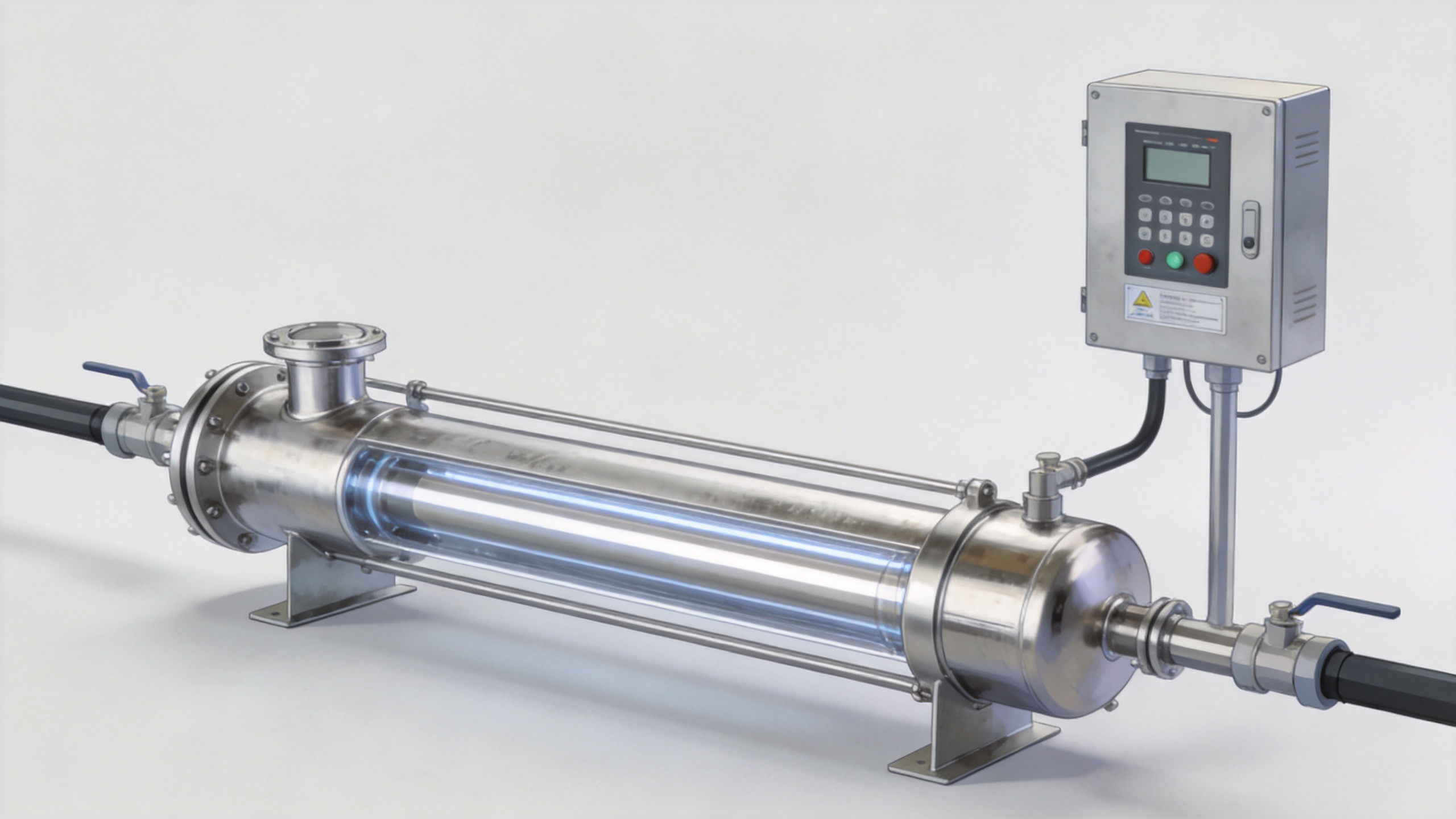
Commercial uv systems for water treatment should be reviewed as an installation package, not an isolated chamber. Confirm chamber material, connection orientation, drain and vent points, lifting access, bypass arrangement, straight-pipe needs, and access for sleeve or lamp service. For skid-mounted or submerged applications, clarify what is included at the system boundary.
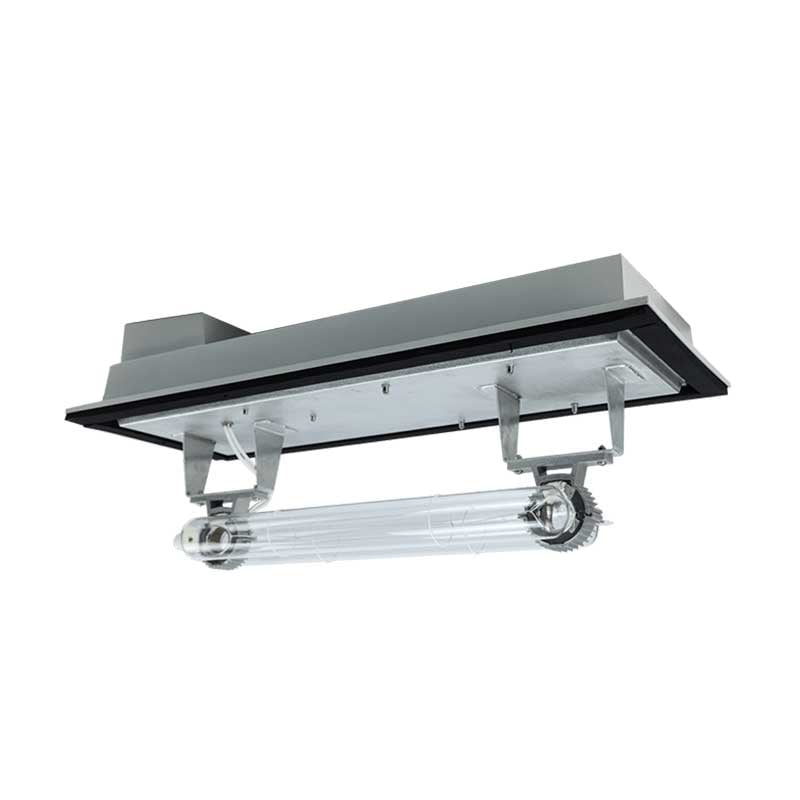
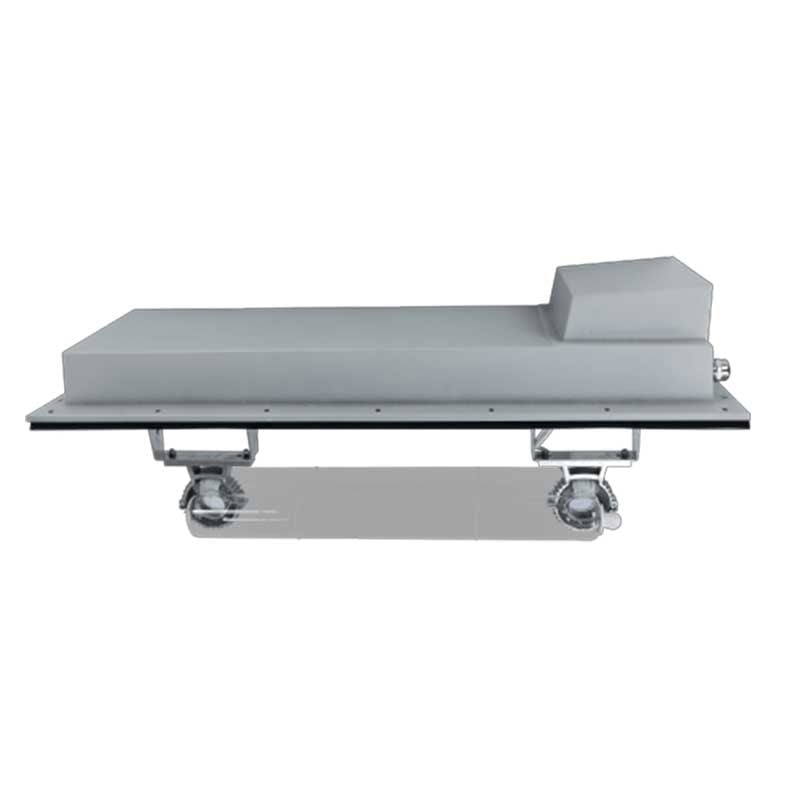
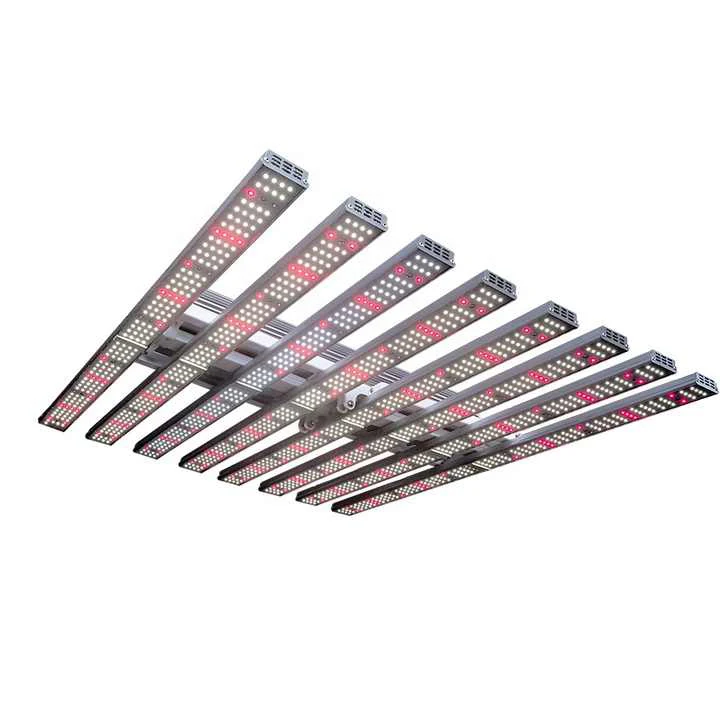
Where the project requires higher output or a submerged arrangement, review the applicable product configuration with the supplier. For example, the Submersible UV rack with induction lamp (600W–4800W) should be evaluated against the project’s confirmed hydraulic layout, control philosophy, and service-access needs rather than assumed suitable from its title alone.
4. Review monitoring and controls before comparing price
The value of ultraviolet light for water systems depends on the ability to operate within the selected range. Ask what is measured, how it is displayed, how the control system responds, and how records can be retrieved. A practical control review covers UV intensity or dose indication, flow input, UVT input where applicable, lamp status, sensor diagnostics, alarms, local controls, remote I/O, and communication options.
For critical installations, also request an alarm matrix. It should show which events create warnings, which trigger a shutdown or diversion response, who receives the signal, and how the event is logged. This makes uv systems for water treatment easier to integrate with a plant’s operating procedures.
5. Compare lifecycle support, not only the initial quote
A low initial price can conceal avoidable costs if replacement parts, technical support, commissioning assistance, or documentation are unclear. Build a lifecycle comparison that includes lamps, sleeves, sensors, seals, cleaning method, recommended spares, lead times, warranty conditions, and training. Ask suppliers to separate included equipment from optional items so the bids can be compared fairly.
- Which consumables and recommended spare parts are included?
- What is the expected replacement interval under the stated operating conditions?
- Where are parts stocked, and what are typical lead times for your market?
- Is startup, commissioning, remote support, or operator training available?
- What site data will the supplier need to troubleshoot performance alarms?
6. Use a final supplier scorecard
Before award, score every bidder using the same weighted criteria: technical fit, validation evidence, controls and monitoring, installation compatibility, lifecycle support, document quality, commercial terms, and project communication. Require suppliers to mark every assumption, exclusion, and customer responsibility. A complete answer is more valuable than a confident but unqualified claim.
For procurement teams, the most suitable uv systems for water treatment proposal is the one that makes performance boundaries visible, supports the required documentation path, and provides a workable plan for operation and service. Use this checklist during technical clarification, then retain the selected supplier’s submittals as part of the commissioning and maintenance record.