EN
EN
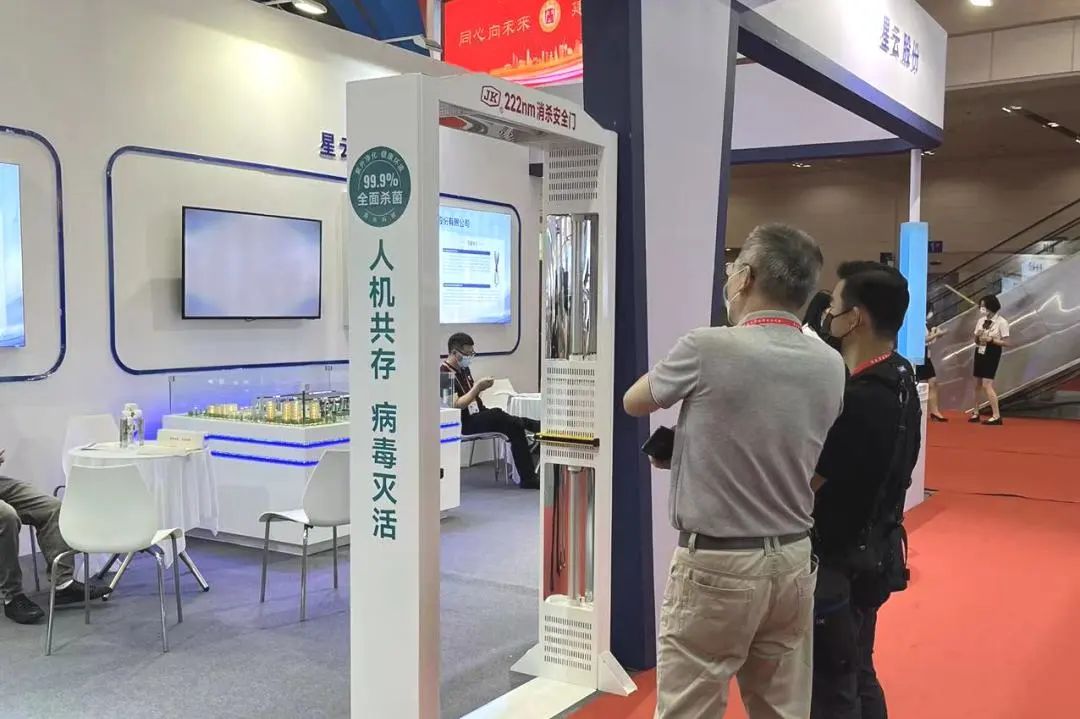
JK brought new high-tech products of epidemic prevention and ultraviolet disinfection to the 2022 Haichuang Fair.
2022/06/04


Home > Education > UV Science
2026/03/03
Ultraviolet (UV) radiation serves as a fundamental and high-resolution analytical tool in gemology, enabling precise characterization of diamond genesis, structural defects, impurity configurations, and treatment histories. The following information systematically introduces the definition and classification of ultraviolet radiation, elaborates the functional mechanisms of long-wave UV, short-wave UV, and deep UV in professional diamond detection, and emphatically demonstrates the technical superiority, gemological significance and application advantages of 222 nm Krypton Chloride (KrCl) excimer deep ultraviolet light source. The results indicate that 222 nm KrCl excimer Deep UV represents a cutting-edge technical solution for the identification of high-purity type Ⅱa diamonds, large-size high-quality CVD synthetic diamonds and HPHT-treated diamonds, which effectively compensates for the limitations of conventional ultraviolet detection bands.
1. Introduction to Ultraviolet Radiation
Ultraviolet (UV) is a form of electromagnetic radiation with wavelengths ranging from 10 nm to 400 nm, positioned between X-rays and visible light. It is invisible to the human eye but carries high photon energy, which can excite fluorescence, stimulate luminescence, and reveal internal structural features of diamond crystals invisible under natural light. Based on wavelength intervals and gemological applicability, ultraviolet radiation is divided into three core bands: UVA (long-wave UV, 315–400 nm), UVB (medium-wave UV, 280–315 nm), and UVC (short-wave & deep UV, 100–280 nm). In modern gemological identification, these three bands constitute a layered detection system for diamond authenticity and quality evaluation.
2. Three Major Ultraviolet Bands in Diamond Detection
2.1 Long-Wave Ultraviolet (LW-UV, 365 nm)
Long-wave ultraviolet at 365 nm is the most widely used conventional detection band in gemology. It mainly excites nitrogen-related defects in diamonds to produce fluorescence, which is applied to observe fluorescence color, intensity, uniformity and zoning characteristics. It provides basic identification evidence for natural diamonds, low-temperature synthetic diamonds and superficially modified diamonds, and is a routine screening tool in diamond grading and certification.
2.2 Short-Wave Ultraviolet (SW-UV, 254 nm)
Short-wave ultraviolet at 254 nm belongs to the conventional UVC band with higher excitation energy. It can penetrate the diamond lattice more effectively and display internal growth structures, dislocation distributions, color zoning and impurity aggregation patterns. It is widely used in the differentiation between natural diamonds and HPHT/CVD synthetic diamonds by characteristic luminescence morphology, which significantly improves the accuracy of synthetic diamond identification.
2.3 Deep Ultraviolet (Deep UV, < 230 nm)
Deep ultraviolet with wavelengths below 230 nm represents the advanced and high-precision detection band in contemporary diamond identification. With ultra-high photon energy, it can excite ultra-fine lattice defects and trace impurity systems in high-purity diamond crystals, which conventional UV bands fail to activate. It shows irreplaceable value in the identification of type Ⅱa diamonds, high-purity large CVD synthetic diamonds, HPHT color-treated diamonds and irradiated diamonds, filling the technical gap of traditional UV detection. It is also called the golden standard and only available technology to identify the authentic natural and artificial diamonds.
3. Technical Advantages and Application Value of 222 nm KrCl Excimer Deep UV
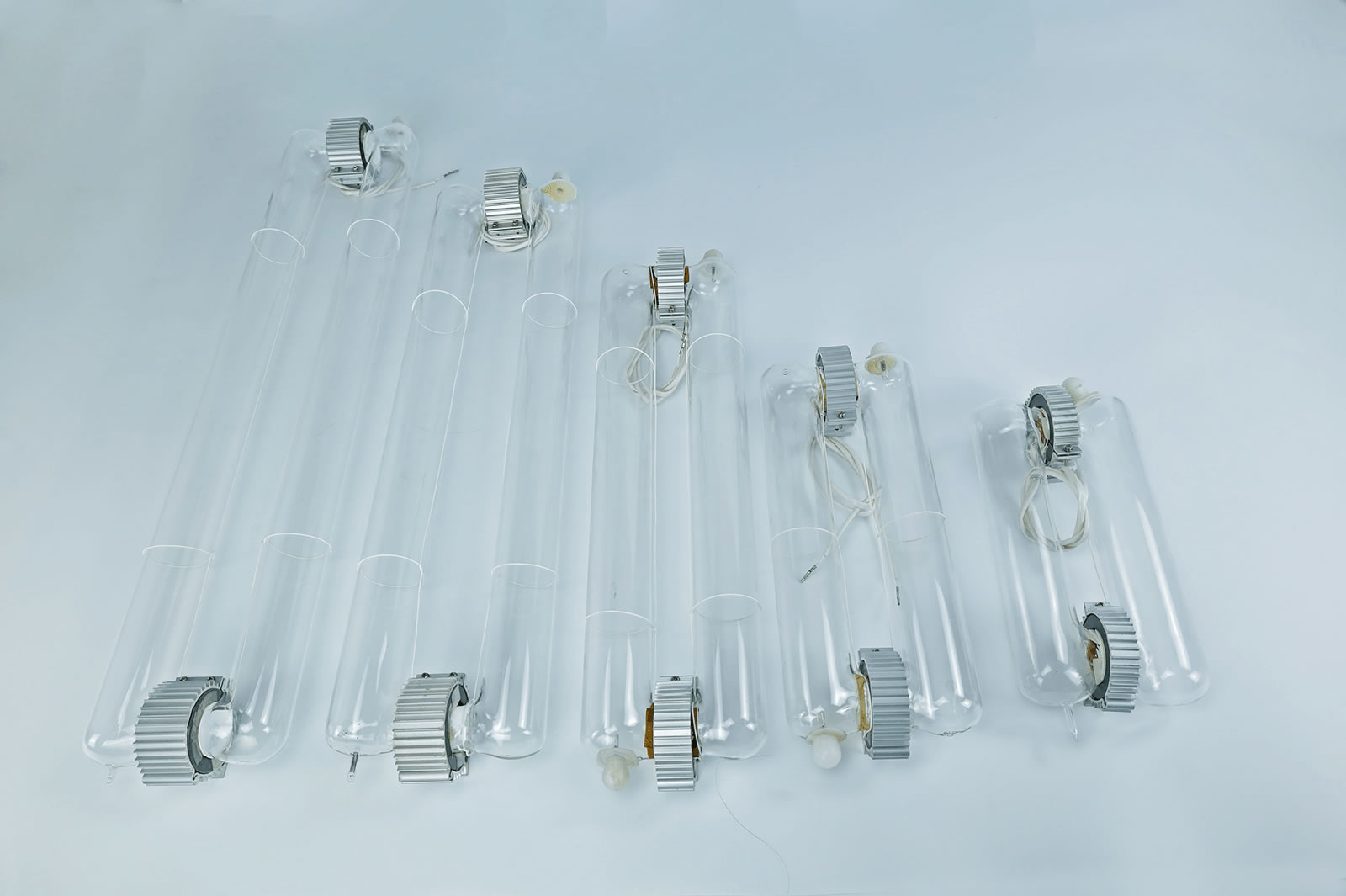
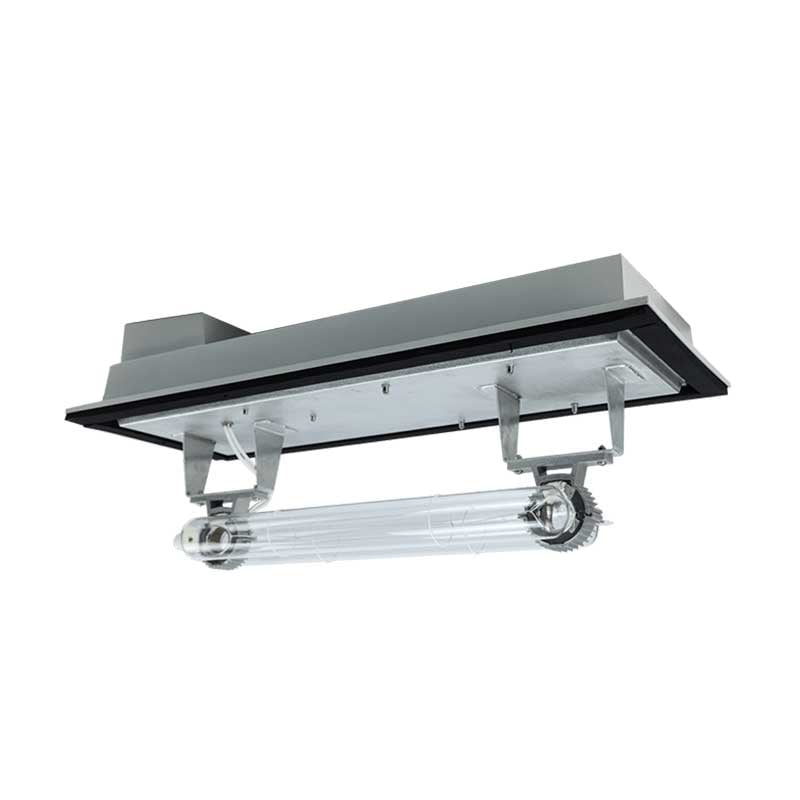
Among all deep ultraviolet light sources, 222 nm Krypton Chloride (KrCl) excimer lamp has become the optimal and most advanced core light source for high-end diamond detection by virtue of its excellent optical performance and stable output characteristics. Based on dielectric barrier discharge (DBD) technology, the 222 nm KrCl excimer lamp outputs quasi-monochromatic, high-purity and high-energy-density deep ultraviolet radiation, with extremely low spectral interference and outstanding luminescence excitation efficiency.
In gemological practice, 222 nm KrCl excimer Deep UV can clearly characterize the micro-growth morphology, defect distribution and impurity configuration inside high-purity diamonds, enabling accurate identification of ultra-high-end diamonds that are difficult to distinguish by 365 nm LW-UV and 254 nm SW-UV. Compared with other deep UV light sources, it possesses appropriate penetration depth, which can detect internal gemological characteristics without damaging the diamond crystal structure; its single-wavelength output ensures the stability and repeatability of detection results; its low thermal effect, long service life and high operational stability fully meet the strict technical requirements of professional gemological instruments.
4. Conclusion
Ultraviolet detection technology constitutes an indispensable part of modern diamond gemological identification. Among them, long-wave UV (365 nm) undertakes routine fluorescence screening, short-wave UV (254 nm) realizes structural differentiation of synthetic and natural diamonds, and deep UV (< 230 nm) breaks through the identification bottleneck of high-purity diamonds. As the most advanced representative of deep ultraviolet light sources, 222 nm KrCl excimer lamp features high excitation efficiency, quasi-monochromatic output, appropriate penetration and excellent stability, which elevates the precision and reliability of diamond identification to a new level. It has become a core technical support for the identification of high-end, high-purity and special-treated diamonds, demonstrating significant academic value and practical application prospects in the gemological industry.
Fujian Juan Kuang Yaming Electric Limited is a world-famous Chinese manufacturer of 222nm KrCl excimer lamps and ready to work with you in the diamond test with this ultimate technology.
For enquiry, please feel free to email to [email protected] or call +86 13960635211 any time.