
 EN
EN
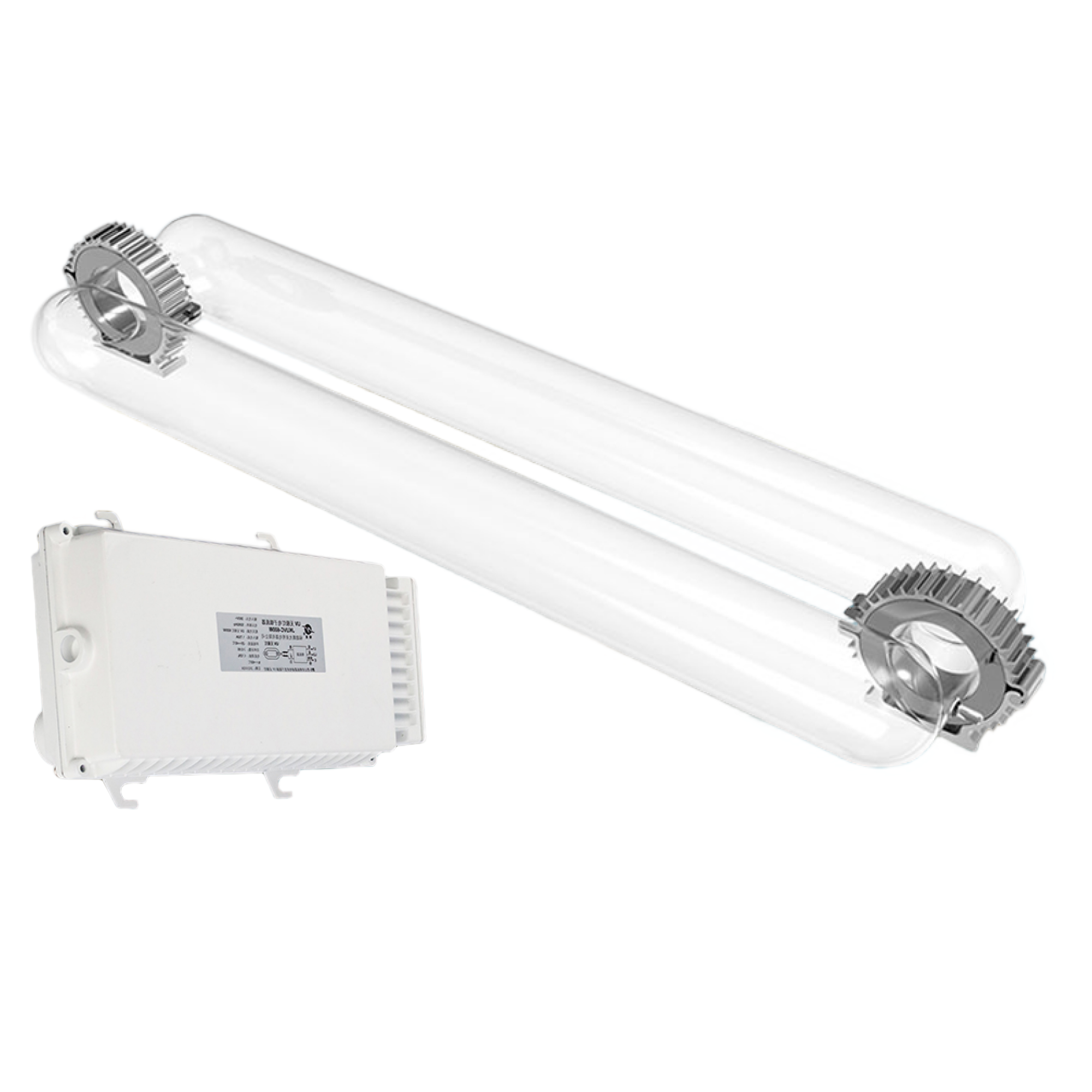
For UV-C disinfection to work best, the right conditions have to come together. These five factors determine whether microorganisms receive a sufficient dose or slip through the cracks:
Line of Sight
UV-C light travels in straight lines. If an object blocks the light’s path, like furniture or equipment, the surfaces behind it may receive little or no exposure.
Distance
UV-C intensity drops off quickly with distance. According to the inverse square law, light intensity is inversely proportional to the square of the distance from the source. This means:
Double the distance → ¼ the intensity
Triple the distance → ¹⁄₉ the intensity
Even small increases in distance can significantly reduce how much germicidal energy reaches a surface, so it’s important to place the UV-C light source as close as possible to target surfaces.
Time
Every microorganism requires a specific dose of UV-C to be inactivated. If the disinfection cycle ends too soon, the total exposure may not be enough.
Intensity
Stronger lamps can deliver higher doses more quickly, but only if line of sight, distance, and time are properly optimized.
Target Organism
Some microbes are more sensitive to UV-C than others. Enveloped viruses (e.g., influenza A, SARS-CoV-2) tend to be inactivated quickly, while non-enveloped viruses (e.g., norovirus) or bacterial spores (e.g., C. diff) may require longer exposure.